The Ethiopian volcano eruption of 2025 became one of the most surprising natural events of the decade. The long-silent Hayli Gubbi volcano in Ethiopia’s Afar region exploded after nearly 12,000 years of dormancy, sending massive ash clouds into the sky and triggering alerts across Africa, the Middle East, and South Asia. The eruption drew worldwide attention and raised new questions about the volcanic activity in the East African Rift System, one of the most geologically active zones on Earth.
This article covers everything you need to know about the 2025 eruption: its causes, timeline, damages, global impact, and scientific significance — written in an optimized SEO format for maximum reach.
What Caused the Ethiopian Volcano Eruption 2025?
The eruption occurred in the highly active East African Rift, where tectonic plates are slowly pulling apart. As these plates separate, magma from deep within the Earth rises toward the surface. Although scientists have monitored nearby volcanoes like Erta Ale, Hayli Gubbi was considered inactive with no recorded eruption in the Holocene period.
In 2025, increased seismic activity, deep rumblings, and underground pressure eventually triggered the explosive eruption. This event revealed that even long-silent volcanoes in the Rift Valley can suddenly awaken.
How the Eruption Started – Timeline of Events
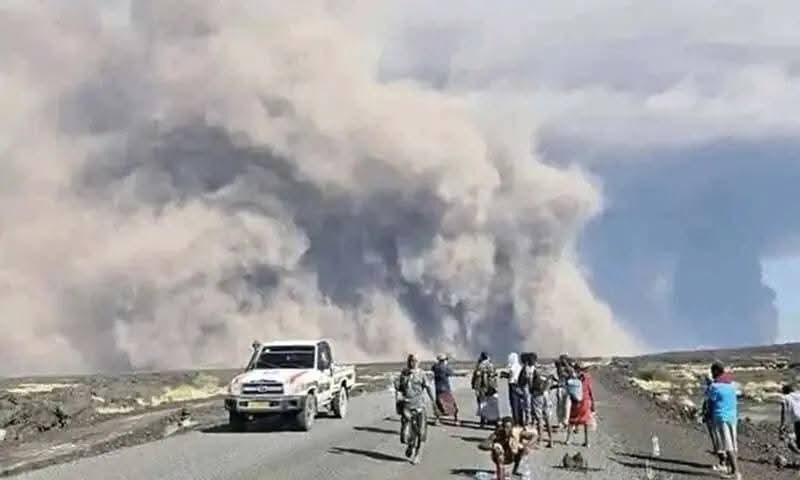
On November 23, 2025, residents near the Afar region felt strong vibrations followed by a massive explosion from the Hayli Gubbi volcano. Within minutes, a dark ash plume shot nearly 14 kilometers (45,000 ft) into the atmosphere. The eruption continued for hours, producing:
- Huge ash clouds
- Shockwaves felt kilometers away
- Tremors and minor quakes
- Disrupted visibility in nearby settlements
Local authorities quickly advised residents to stay indoors as ash blanketed homes, roads, water sources, and livestock areas.
Damage and Local Impact in Ethiopia
The good news: there were no human casualties reported. However, the eruption caused several disruptions:
1. Heavy Ashfall in Afdera & Nearby Villages
Entire communities were covered in volcanic ash. People faced breathing difficulties, and authorities distributed masks and water.
2. Impact on Livestock and Pastoral Communities
Afar is home to pastoral families who depend on cattle, goats, and camels. Thick ash covered grazing areas, making it difficult for animals to feed. This may lead to long-term economic challenges for local herders.
3. Impact on Travel & Tourism
The Danakil Depression — one of the most visited adventure destinations — had tourists stranded as visibility dropped and roads closed due to ash.
Global Impact: Ash Travels Across Continents
One of the most dramatic effects of the 2025 Ethiopian volcano eruption was how far the ash traveled. High-altitude winds carried volcanic ash across:
- Yemen
- Oman
- Saudi Arabia
- Arabian Sea
- Pakistan
- India
Aviation Alerts
Countries like Pakistan and India issued volcanic ash warnings, as clouds reached flight altitudes of 40,000+ feet. Many flights were:
- Cancelled
- Delayed
- Rerouted to avoid ash-filled skies
This event showed how a single eruption in East Africa can affect international air travel thousands of kilometers away.
Scientific Importance of This Eruption
Volcanologists around the world have labeled the Hayli Gubbi eruption as a rare and valuable event. Since the volcano had not erupted in thousands of years, scientists can now study:
- Rift-valley magma behavior
- Underground pressure systems
- New lava and rock formations
- Gas emissions, including sulfur dioxide
This eruption also helps experts identify other “silent” volcanoes that might become active in the future.
Environmental Effects of the 2025 Ethiopian Eruption
The blast released huge amounts of ash and gases into the upper atmosphere. While short-term climate effects are still being analyzed, some outcomes include:
- Temporary cooling in certain regions
- Air pollution affecting visibility
- Acidic particles affecting plants and water sources
- Soil enriched with new minerals after ash settles
The full environmental impact will unfold over months and years.
What Happens Next?
Although the eruption has stopped, scientists warn that aftershocks or minor activity could continue. Monitoring stations are now focusing on:
- Seismic movements
- Gas emissions
- Ground deformation
- Crater temperature levels
Local authorities may need help restoring farms, clearing ash, and supporting affected communities. The event also highlighted the need for improved volcano monitoring systems across Africa.
Conclusion: A Historic Eruption That Shocked the World
The 2025 Ethiopian volcano eruption was a historic moment — a reminder of Earth’s unpredictable nature. A volcano quiet for 12,000 years suddenly reawakened, affecting villages, animals, air travel, and even distant countries across Asia. While the immediate danger has passed, the scientific and environmental lessons from this event will guide volcanic research for years to come.