
Cricket, often called a gentleman’s game, is one of the oldest and most loved sports in the world. Originating in England during the 16th century, cricket has evolved over hundreds of years into a global sport enjoyed by millions. From local matches on village greens to international tournaments with millions of viewers, the history of cricket tells a story of tradition, passion, and progress.
Early Origins of Cricket
The origin of cricket can be traced back to the late 1500s in southeast England, where it was first played by children using simple equipment — a wooden stick and a ball. By the 17th century, adults began to play organized matches, and the sport quickly became popular among English villagers and aristocrats alike.
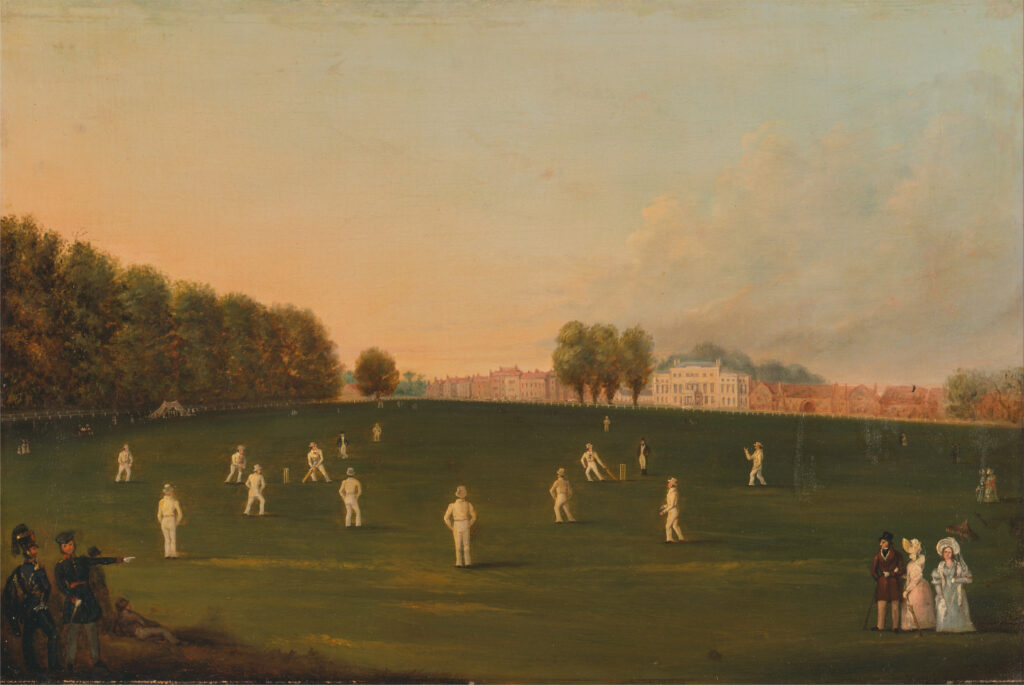
By the 18th century, cricket had developed formal rules, attracting large crowds and even royal interest. Clubs like the Hambledon Club, founded in the 1760s, were instrumental in developing the early structure of the game.
The Birth of Modern Cricket
The foundation of the Marylebone Cricket Club (MCC) in 1787 marked a turning point in cricket history. The MCC became the official custodian of the Laws of Cricket, standardizing the pitch length (22 yards), bat shape, and game format.
Cricket spread rapidly throughout the British Empire, reaching India, Australia, the West Indies, and South Africa. These regions would later become cricketing powerhouses, shaping the future of the game.
International Cricket Begins
The first recorded international cricket match took place in 1844 between Canada and the United States. But true international cricket began in 1877, when England and Australia played the first Test match at the Melbourne Cricket Ground. This match laid the foundation for the Ashes series, one of the sport’s oldest and most famous rivalries.

By the early 20th century, more countries joined the cricketing world — including India (1932) and Pakistan (1952) — marking the start of cricket’s global expansion.
The Rise of Limited-Overs Cricket
In the 1960s, cricket underwent a major transformation with the introduction of one-day cricket, featuring 60 overs per side. This faster format attracted new audiences and sponsors.
The first One Day International (ODI) was played in 1971, and the first Cricket World Cup followed in 1975, won by the West Indies. Colorful uniforms, white cricket balls, and day-night matches in the 1980s made cricket even more exciting and commercially appealing.
The T20 Revolution
In 2003, cricket changed forever with the birth of Twenty20 (T20) cricket. This short, 20-over format was thrilling, fast-paced, and perfect for modern audiences.
The launch of the Indian Premier League (IPL) in 2008 turned T20 cricket into a global entertainment industry, combining sports with showbiz. The success of T20 leagues worldwide brought in new fans and made cricket more accessible than ever before.
Cricket in the Modern Era
Today, cricket is governed by the International Cricket Council (ICC), which oversees global tournaments like the Cricket World Cup, T20 World Cup, and World Test Championship.
Modern stars such as Virat Kohli, Babar Azam, Ben Stokes, and Kane Williamson continue the legacy of greats like Don Bradman, Sachin Tendulkar, and Brian Lara. With technology, analytics, and innovations like Decision Review System (DRS), the game continues to evolve.
Conclusion
From its humble beginnings in English villages to high-energy stadiums across continents, the history of cricket reflects centuries of evolution and unity. It is more than just a sport — it’s a culture, a passion, and a bridge connecting nations. As cricket continues to grow globally, its legacy remains as strong and timeless as ever.